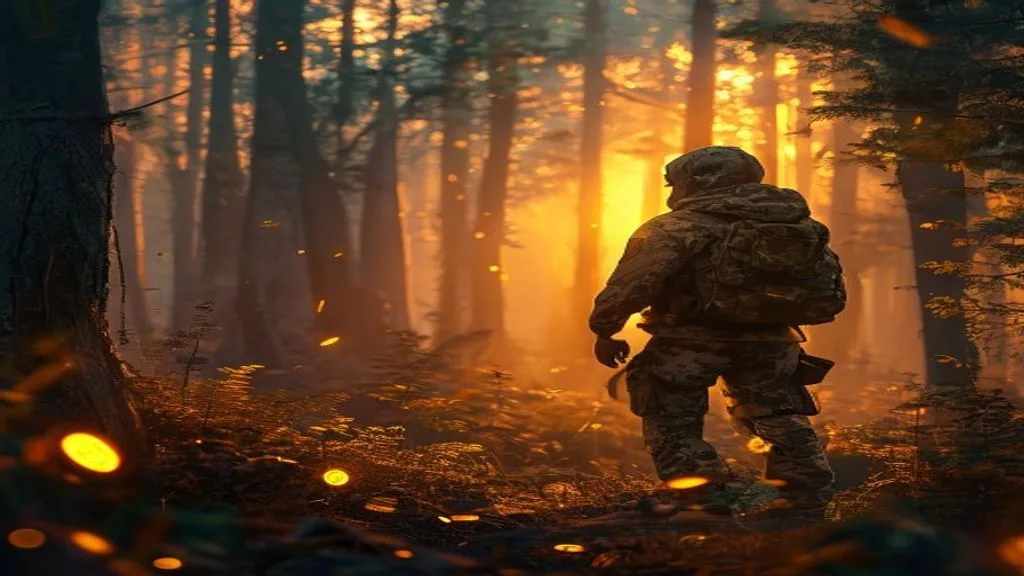
The first time I showed up to a public hunting area, I parked my truck, grabbed my gear, and walked straight into the woods — confident, maybe a little too confident. About forty minutes in, I nearly stumbled into another hunter’s blind. He was already set up, had probably been there since 4 AM, and I just… appeared. Out of nowhere. The look on his face said everything. I mumbled an apology and backed away, but the damage was done. That whole morning felt off.
That was the moment I realized I had no idea what I was doing — not in terms of the hunting itself, but in terms of how people are supposed to behave out there. Public land is shared space. And shared space has rules, even when nobody writes them down.
The Thing About Public Land Nobody Talks About Enough
Public land hunting is genuinely different from hunting on private property. I didn’t fully understand this at first. On private land, you mostly deal with one landowner, one set of expectations, maybe a few other guests. But on public land? You’re out there with strangers who all have the same legal right to be there as you do. (Which, honestly, felt kind of philosophically interesting to me when I first thought about it — like a weird social experiment with firearms.)
The etiquette that exists around public land hunting isn’t just about being polite. It’s about making the whole system work. When one person ignores it, everyone’s hunt suffers. I’ve seen it happen. I’ve caused it to happen, that first morning.
The concept of shared natural resources and the ethics around using them is something that actually goes back centuries — hunting as a practice has always carried social norms alongside legal ones, and public land just makes those norms more visible and more fragile.
What I Slowly Figured Out
The first rule — and I wish someone had just said this plainly to me — is that early arrival means something out there. If another hunter is set up in a spot, that spot is taken. Full stop. It doesn’t matter that it’s technically public land and you theoretically have equal access. You don’t walk into someone’s setup. You don’t set up fifty yards away hoping to “share” the area. You move on. Find another spot.
This felt obvious in retrospect. But I genuinely didn’t know.
The second thing I learned is about noise and movement — both of which I was terrible at managing. Public land often means pressure. Lots of hunters, lots of disturbance. The more you crash through brush, slam car doors in the parking area, or talk loudly at dawn, the more you ruin it for everyone nearby. I personally think this is the most underrated part of public land etiquette, because it’s invisible. Nobody sees you being loud. But every hunter within half a mile feels it.
I started thinking about this more seriously after I read through some notes I found while researching what private land trophy deer hunting actually involves — and one thing that stood out was how controlled the environment is on private land. Fewer people, managed access, predictable conditions. On public land, you don’t get any of that. You have to create your own discipline.
The Parking Lot Is Part of It Too
Here’s something I did not expect: the parking area matters. A lot. Blocking access, parking in a way that signals “I own this trailhead,” or even leaving trash in your truck bed — people notice. Hunters talk. Public land communities are smaller than they look.
I also learned (the hard way, kind of) that you shouldn’t park right at the trailhead if you’re planning to hunt nearby. Walk in farther than feels comfortable. Other hunters will see where you came from. And if you’re hunting close to the road, you’re probably not hunting in a great spot anyway.
The Harder Conversation: When Someone Breaks the Rules
What do you do when someone else violates the etiquette? This is where it gets genuinely tricky for me. My instinct is to say something. But confrontation in the woods, with strangers, when everyone’s carrying — that’s a situation worth approaching carefully.
Most of the time, the answer I’ve landed on is: let it go, adjust, move. Is that frustrating? Absolutely. But public land hunting requires a certain flexibility that private or guided hunts don’t demand in the same way. If you want a more structured experience, there’s real value in looking at something like what top-rated hunting outfitters actually offer — because sometimes the structure is worth it. Public land is a different kind of game.
That said — if someone is doing something genuinely illegal, that’s a different matter. That’s what wildlife officers are for.
The Mindset Shift That Actually Helped Me
At some point I stopped thinking of public land as “free hunting land” and started thinking of it as a commons. A shared resource that only stays good if everyone treats it that way. That reframe changed how I moved through it.
I started being more intentional about things like packing out trash (even trash I didn’t leave), being willing to give up a spot I’d scouted if someone else got there first, and keeping my distance from other hunters even when it cost me prime territory. (Honestly, the last one still stings sometimes. I scouted a ridge for three weeks before season opened, showed up opening morning, and someone was already there. I went to my backup spot. It was the right call. I still think about that ridge.)
If you’re thinking about moving from public land toward guided hunts as a way to develop your skills in a more controlled environment — which is a completely valid path — resources like what I found when researching guided elk hunting outfitters can actually help you understand what “structured hunting” looks like before you commit to anything.
But public land has something guided hunts don’t. It has friction. And weirdly, the friction is where a lot of the learning happens.
Would I trade my early awkward experiences on public land for a smoother start? Probably not. The discomfort taught me things about awareness, respect, and patience that I don’t think I’d have learned any other way. Public land hunting etiquette isn’t a rulebook. It’s a posture. And you pick it up slowly, mostly by getting it wrong first.
Pertanyaan yang Sering Diajukan (FAQ)
How do I know if a spot on public land is already "taken" by another hunter?
If you see a blind, tree stand, or any sign of an active setup — even just scent control gear hanging nearby — treat it as occupied. The general rule is that whoever arrived and set up first has priority for that area, at least for that day.
Is it okay to set up close to another hunter if there's enough space?
Honestly, closer than 200-300 yards is usually too close on public land, especially for deer hunting. Even if it feels like there's "room," you're still competing for the same deer movement and creating noise pressure in the same zone. Move farther than feels necessary.
What's the most common mistake new public land hunters make?
Underestimating how much other hunters notice. Noise, parking habits, how you move through the woods — other hunters are paying attention, even when you think no one's around. Treating the land and the people on it with visible respect goes further than most people expect.