So you wanna manage deer on your property but you’re not sitting on a thousand acres of prime farmland? Welcome to the club. Took me years to figure this out on my own little patch—about 12 acres squeezed between a golf course and a housing development. Not exactly deer paradise on paper, but you’d be surprised.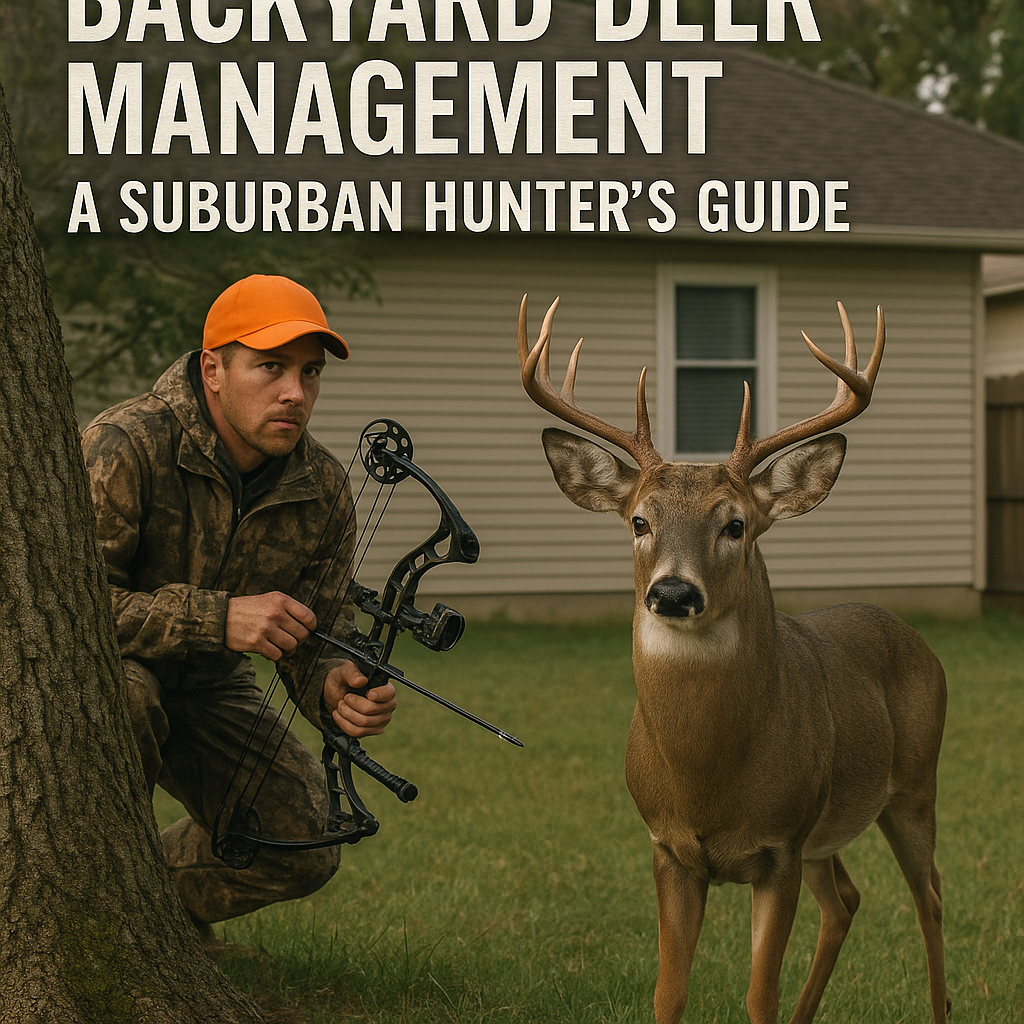
Honestly, “suburban deer management” sounds like an oxymoron at first. You’re mowing your lawn and a doe with twins is staring at you from the treeline like you’re the hired help. But here’s the thing. If you’re willing to put in the work, you can absolutely grow bigger bucks and hold more deer on smaller parcels. Just takes a different playbook than the big woods guys use.
Let me break down what actually worked for me, what was a total waste of time, and what I wish someone had told me before I started burning cash on food plots and minerals.
First Things First: Know What You’re Dealing With
Okay, so before you do anything, you gotta figure out your neighborhood. Not your actual human neighbors, though that matters too, and we’ll get to that. I mean the deer neighborhood.
Are you in a “refuge” area? You know, one of those spots where deer are safe because nobody can legally shoot them? There’s a golf course near me that’s basically a deer sanctuary. The deer KNOW it. They bed down along the fairway fringes because no one’s gonna mess with them there. That’s a blessing and a curse.
The curse part? If the deer feel safe next door, they’re not gonna feel pressured on your land. They’ll slip in at night, munch your soybeans, and slide back to their safe zone at dawn. So your management plan has to account for that. You’re not trying to create a new home for them. You’re trying to make your place worth the risk.
And the human neighbors? Whole other beast. I’ve got one guy who feeds corn year-round. Another one literally screams at deer if they touch his hostas. You gotta figure out who’s who. Talk to your neighbors. Trust me, easier than getting into a feud over a fence line. And honestly, the corn-feeding guy isn’t gonna stop because you ask nicely, so just… plan around it.
The “Little Parcel” Strategy
Here’s what I learned after probably three or four failed seasons of trying to do “big woods” management on a tiny lot: you can’t do it all. You CANNOT be a one-stop shop for every deer need on 5-10 acres. The math just doesn’t work.
What you CAN do is become the best dang stop on their daily route.
Think of it like this. Deer on small parcels are like commuters. They have a routine. Evening rolls around, they leave the safe bedding area, hit a food source, maybe grab water, and get back to cover before daylight. If your property only offers one of those things, you’re a pit stop. Which is fine. But you gotta be the BEST pit stop they’ve ever seen.
So what’s your advantage? What can you offer that the golf course or the neighboring woods can’t? Usually that’s quality food. Not just a random corn feeder, though those have their place. Real nutritious, high-energy food that’s accessible and safe.
I turned about 2 acres of my property—the part that was just crappy lawn and overgrown weeds—into a series of small food plots. And I’m not talking tractor, either. Rented a little walk-behind tiller from Home Depot and went to town. Took me a whole weekend, not gonna lie. My back ached for a week after. Worth it though. 😉
Food Plots (Without a Tractor)
Alright, the food plot thing. It’s the golden ticket for holding deer on small properties, but there’s SO much bad advice out there. Guys talk about planting 5 acres of clover and I’m sitting here like “bro, my whole property is 12 acres, what are you talking about?”
The key is diversity and timing. You can’t just plant one thing and hope it lasts all season. That’s lazy. Here’s what I do, and it’s worked pretty well:
-
Early Season (August–September): This is all about pulling deer off the safe zones. I plant a mix of lablab and cowpeas. They’re like crack to deer, and they’ll leave the golf course for it. No joke. One buck on camera literally crossed two roads and a fairway to get to my beans. (Maybe don’t tell the golf course, lol.)
-
Rut (Late October–November): Deer aren’t thinking about food as much, but the does are still hitting the plots. That’s where my perennial clover patch comes in. Low maintenance, comes back every year, holds does. And where the does are, the bucks will follow. It’s not rocket science. Guys overthink this and outsmart themselves.
-
Late Season (December–February): This is CRITICAL. Most folks give up hunting after the rut and ignore their plots. Big mistake. Those late-season plots—brassicas like turnips and radishes, or even a good stand of winter rye—help you carry deer through the hard months. It’s the difference between deer staying on your property all winter and them leaving for the neighbor’s corn pile.
Funny story. I planted a fifth of an acre of turnips last year as kind of an afterthought. The deer annihilated them by mid-January. I mean, they dug up every single bulb. Looked like pigs had been through there. Crazy what they’ll do when food runs low.
The Real Secret: Security, Not Just Food
Okay, here’s where I’m gonna sound like an old man, but hang with me. Food is great, but if the deer don’t feel safe, they won’t use it. Period. End of story.
On a small property, security means obstruction. You need a visual barrier. I’ve seen so many guys plant a perfect brassica plot right in the middle of an open field and then wonder why they only see deer after dark. Duh. The deer are terrified. Zero cover.
When I planted my “big” plot—the bean field—I made a point to leave a 20-yard buffer of switchgrass and native weeds around the edges. I know it looks a little unkempt to my neighbors, but honestly? I don’t care anymore. It creates a “safe corridor” for deer to move into the plot. They can smell, see, and hear danger before exposing themselves. That made a HUGE difference in daylight movement. Night and day difference.
Also, this is huge—don’t walk through the property. Figure out your entry and exit routes before you ever step foot in the woods. If you scent up the whole 12 acres on your way to the stand, the deer know. They’ll pattern you faster than you pattern them. I got caught doing this my first season. Walked right down the edge of the field, no big deal. Three days later, I couldn’t buy a daytime deer sighting. They had all shifted their movement by an hour or two. It’s wild.
The “Neighbor” Problem (Part 2)
So I mentioned the corn-feeding neighbor. It’s like a weekly school bus run for the deer, just a pile of shelled corn dumped on the ground. Drives me INSANE. Not because I hate the guy—he’s actually nice—but because it messes up my whole plan.
Why would a deer eat my carefully planned lablab when there’s a literal corn feedlot 200 yards away?
The answer is… they won’t. Not while the corn is there. Baiting is a powerful lure, I’ll give it that. So I adapted. I started planting things that are better than corn. Sounds arrogant, I know. Hear me out. Corn is like a McDonald’s cheeseburger. Fills you up, but not great for you. My food plots? Nutrient-dense salad. When the does are nursing fawns in October, they NEED that protein. They’ll walk past the corn to get to my chicory mix.
Took a while, but I’ve shifted a significant portion of the local deer movement in my favor just by offering something more nutritious than the neighbor’s bait pile. Takes time, though. And a thick skin. You might have to watch a giant buck waltz right past your window while he’s en route to the corn pile. Ugh. I know. I’ve been there. :/
A Note on Hunting Pressure
Here’s a hard truth no one wants to hear: the more you hunt, the more night-time deer you’ll have.
If you’re out there in your box blind every single evening from October through January, the deer WILL figure it out. They aren’t stupid. On a small property, the pressure is amplified. Every time you climb out of that stand, you’re teaching them that the danger comes from your property.
My rule of thumb? Hunt the first and last hour of light, and only hunt a stand a few times a week. I’d rather hunt 4 times and see a good buck than hunt 15 times and educate every deer in the county. It goes against our instinct as hunters—we want to be out there every chance we get—but it’s so important for the suburban margin hunter.
There was a season where I got greedy. Had a buck pattern figured out, hunted the spot 5 days in a row. Day 6? Gone. Didn’t see him for two weeks. He came back eventually, but in the dark. I basically wound the clock back on my own success. Don’t be me. Learn from my mistakes.
The Cold, Hard Math of It
Let’s talk numbers for a second. Nothing fancy here, just my own experience.
I put in roughly $200 a year in seed, maybe $100 in fertilizer—wait, actually fertilizer prices are crazy right now, probably $200 in fertilizer alone. So let’s round up to $500 a year for food plots. Plus a $300 protein feeder I fill every other week with cheap pellets. That’s maybe another $400 a year.
Sounds like a lot, but I’m not leasing land, not paying for a big truck or a fancy UTV. My “hunting budget” is basically the cost of a few weekend trips to public land, except I get to walk 20 yards outside my back door. For me? Worth every penny. Plus, the deer viewing when I’m not hunting—watching a buck chase a doe around my clover patch—is priceless. My wife rolls her eyes at the trail cam pics, but I know she secretly loves it. 🙂
Starting Small: What to Do This Week
Okay, you’re convinced. You want to start messing with your own backyard. Where do you start? Here’s my “No-Dumb-Ideas” list:
-
Take an inventory of what you have. Walk the property. Map out the bedded areas, travel corridors, existing food. What natural browse is there? Any acorns? You might be sitting on a better setup than you think.
-
Don’t plant a huge plot. Like I said, start small. 1/4 acre is plenty for your first attempt. Watch what the deer do. Learn from that before you go all out.
-
Make an access plan. This should be your #1 priority once you decide to hunt. Mark your entry route. Figure out where the wind will be coming from. Do not, I repeat, DO NOT just waltz in there.
-
Get a trail camera. Actually, get two. One on the food plot, one on the edge of the bedding area. You’ll learn more in a week of camera data than in a month of guessing.
-
Be patient. The big one, and I can’t stress this enough. Took me two full years before I saw a real shift in deer behavior on my property. First year, I was just feeding the neighbors’ deer. Second year, started holding a few. By the third year, I had a mature buck on camera during daylight on a semi-regular basis. It takes time.
This is getting long, I realize, but it’s because I wish someone had dumped all this on my lap before I spent 3 years fumbling around in the dark. Bottom line: you don’t need a big farm to play the game. You just need to be smarter with the small piece you’ve got. Know your neighborhood, provide the right food at the right time, and keep that hunting pressure minimal.
Good luck out there. And watch the wind. 😉